English

PRESS RELEASE: Indigenous Peoples' Caucus Opening Statement


November 3, 2021

Indigenous Peoples’ Caucus Opening Statement for COP26


Glasgow, Scotland - November 3

HIGH LEVEL OPENING

31 October 2021

READ BY: Taily Terena, Terena Indigenous People

Indigenous Peoples are affected first and worst by climate change and colonial climate action, yet we drive critical climate solutions rooted in our relationships with the living world. 

In exercising our protection on the frontlines, we face criminalisation, human rights violations, and assassination. And in the COPs, we are excluded from decision making on issues that affect us the most. The COVID-19 pandemic has only exacerbated this injustice.

We call for a rapid reduction in emissions that drives a just transition away from fossil fuels and ensures a 1.5 degree future.

We are deeply concerned by so-called Nature-based Solutions developed without our input and free, prior, and informed consent - undermining our self-determination and secure land tenure.

Our expectations for this COP are that: 

  1. Article 6 upholds human rights, and specifically, Indigenous Peoples’ Rights, and leads to real emissions reductions. 

  2. Indigenous food sovereignty is centered in all agricultural discussions, and particularly the Koroniva dialogue. 

  3. Equitable and long-term climate financing directly to Indigenous Peoples’ Organizations across all seven regions.

  4. A permanent SB agenda item is established on Loss and Damage. Any outcome must safeguard Indigenous Peoples’ Rights and address non-economic losses to our communities.

  5. The draft three-year Work plan of the LCIPP is adopted and implemented, including  recommendations of the FWG Report.

  6. The Gender Action Plan is advanced, and upholds land rights, including those of Indigenous women.

  7. Persons with Disability are meaningfully included in UNFCCC processes as a formal constituency.

COP26 and future COPs must ensure the participation of Indigenous Peoples, including those of us with multiple intersections of identity. 

Colonialism caused climate change.

Our Rights and Traditional Knowledge are the solution.

Thank you, Chair.

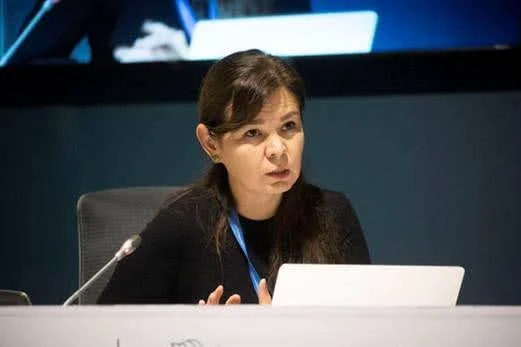
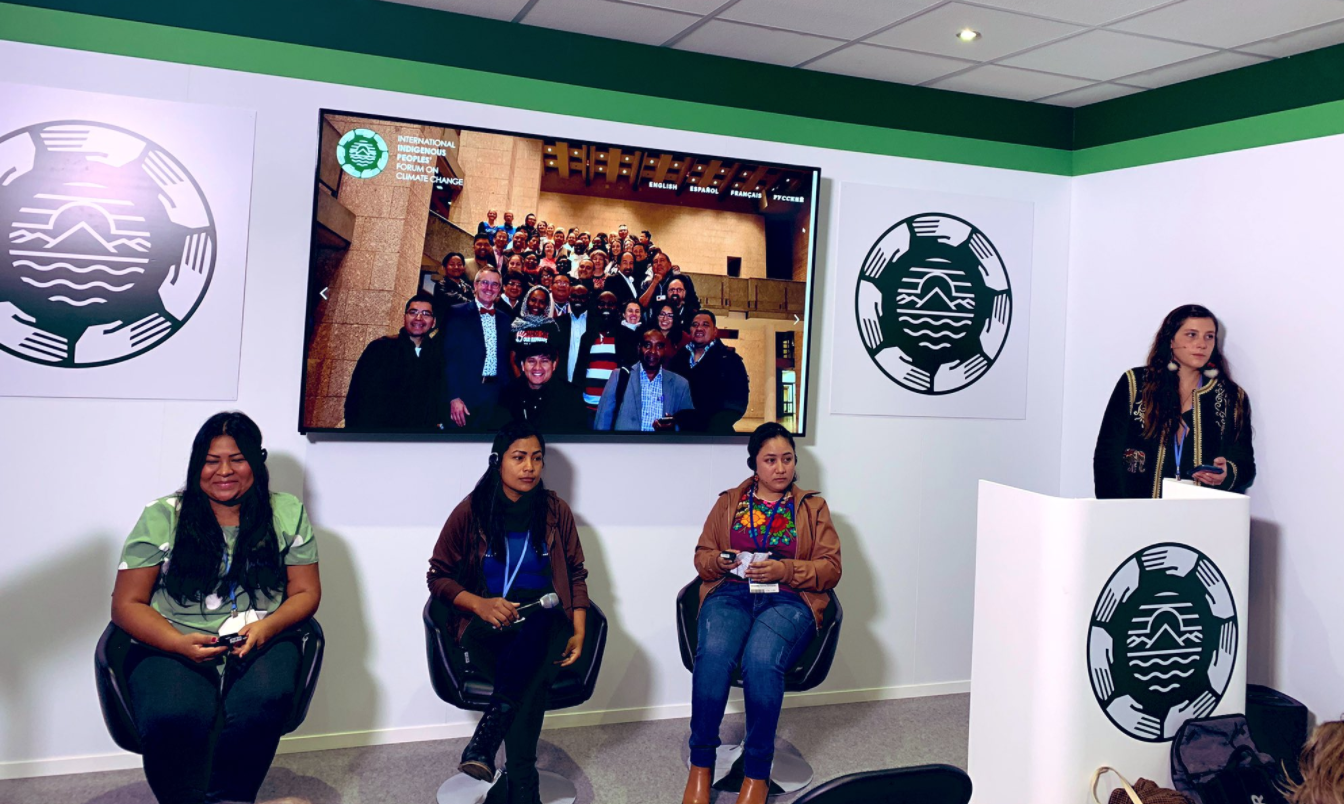
Taily Terena presenting the opening statement of the Indigenous Peoples Caucus at COP26.


Contact: Kera Sherwood-O'Regan

Email: kera@sustainedability.com

Phone: +64 210 410 932


PARA PUBLICACIÓN INMEDIATA


3 de noviembre de 2021

Declaración de apertura del Cónclave de los Pueblos Indígenas para la COP26


Glasgow, Escocia - 3 de noviembre

APERTURA DE ALTO NIVEL

31 de octubre de 2021

LEÍDO POR: Taily Terena, Pueblo Indígena Terena

Los Pueblos Indígenas son los primeros y peores afectados por el cambio climático y la acción climática colonial, sin embargo, impulsamos soluciones climáticas críticas enraizadas en nuestras relaciones con el mundo vivo.

Al ejercer nuestra protección en primera línea, nos enfrentamos a la criminalización, las violaciones de los derechos humanos y el asesinato. Y en las COP, se nos excluye de la toma de decisiones sobre las cuestiones que más nos afectan. La pandemia del COVID-19 no ha hecho más que agravar esta injusticia.

Pedimos una rápida reducción de las emisiones que impulse una transición justa para abandonar los combustibles fósiles y garantice un futuro de 1,5 grados.

Estamos profundamente preocupados por las llamadas soluciones basadas en la naturaleza desarrolladas sin nuestra aportación y consentimiento libre, previo e informado, lo que socava nuestra autodeterminación y la seguridad de la tenencia de la tierra.

Nuestras expectativas para esta COP son que:

  1. El artículo 6 defienda los derechos humanos, y específicamente los derechos de los pueblos indígenas, y conduzca a una reducción real de las emisiones.

  2. La soberanía alimentaria indígena se centre en todas las discusiones agrícolas, y en particular en el diálogo de Koroniva.

  3. Financiación climática equitativa y a largo plazo directamente a las Organizaciones de Pueblos Indígenas en las siete regiones.

  4. Se establece un punto permanente en la agenda del SB sobre Pérdidas y Daños. Cualquier resultado debe salvaguardar los derechos de los pueblos indígenas y abordar las pérdidas no económicas de nuestras comunidades.

  5. Se adopta e implementa el proyecto de plan de trabajo trienal de la LCIPP, incluyendo las recomendaciones del informe del FWG.

  6. El Plan de Acción de Género avanza y defiende los derechos a la tierra, incluidos los de las mujeres indígenas.

  7. Las personas con discapacidad se incluyen de manera significativa en los procesos de la CMNUCC como un grupo formal.

La COP26 y las futuras COP deben garantizar la participación de los Pueblos Indígenas, incluidos los que tenemos múltiples intersecciones de identidad.

El colonialismo causó el cambio climático.

Nuestros derechos y conocimientos tradicionales son la solución.

Gracias, Presidente.

Traducción realizada con la versión gratuita del traductor www.DeepL.com/Translator

Taily Terena presentando la declaración de apertura del Caucus de Pueblos Indígenas en la COP26.


Contacto: Kera Sherwood-O'Regan

Correo electrónico: kera@sustainedability.com

Teléfono: +64 210 410 932
Live stream from the Indigenous Peoples Pavilion Available

The Indigenous Peoples Pavilion is located in the Blue Zone of the COP26 Glasgow campus. To attend in person, you must have UNFCCC accreditation to the Blue Zone. Events at the Indigenous Peoples Pavilion will take place in Events Hall D. There is level entry to the Pavilion from the main floor. Inside the pavilion, seating is available and is spaced to maintain physical distancing for COVID-19 safety.

Most Pavilion events for the duration of COP26 will be live-streamed to facilitate participation from around the world.

Please check event details ahead of time to ensure your session will be live-streamed and to view interpretation options. We encourage registering and joining events via Zoom where possible to access interpretation and audience engagement functions.

You can watch the live broadcast, click here.

Pavilions operation hours: Monday, 1 November to Friday, 12 November: 08:00 – 22:00 hrs

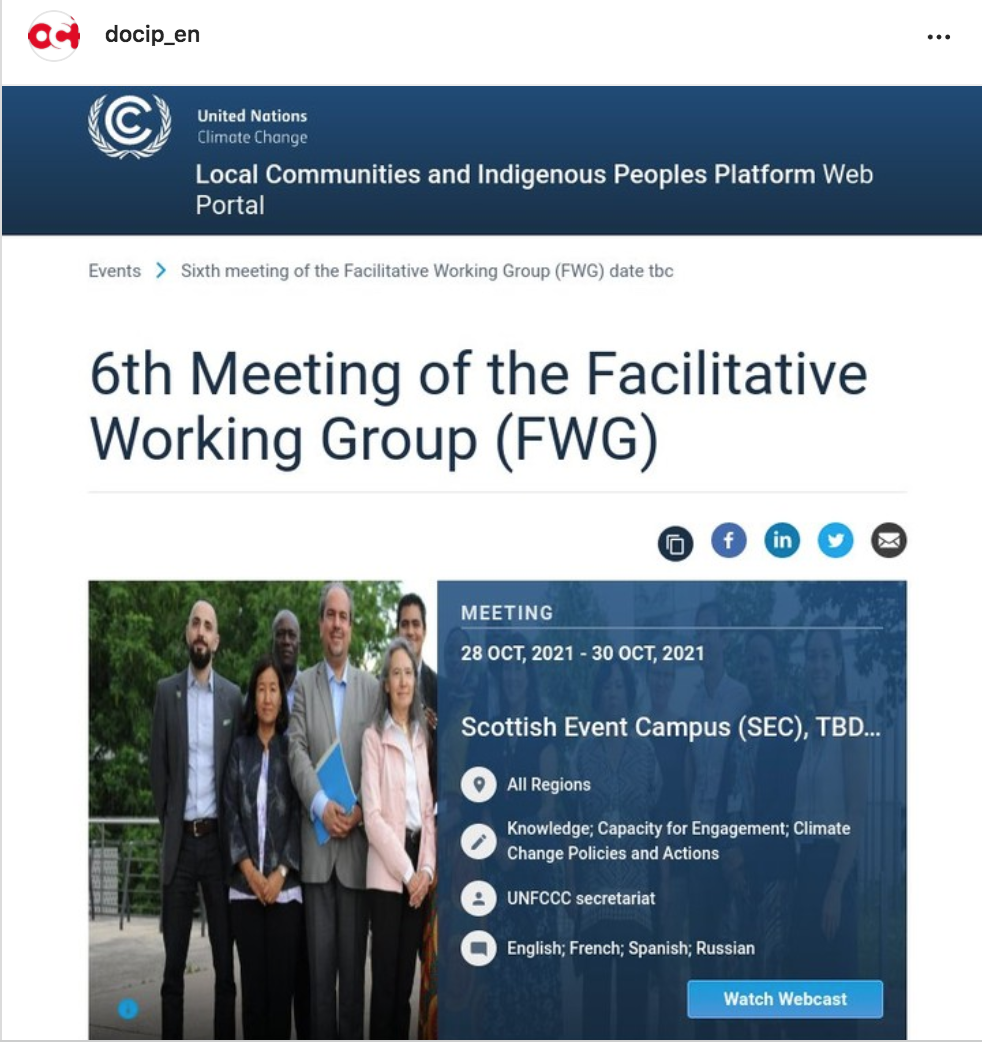
Facilitative Working Group on the Local Communities and Indigenous Peoples

Don't miss the last day of the 6th meeting of the Facilitative Working Group on the Local Communities and Indigenous Peoples Platform tomorrow!

✅ Date: Saturday, October 30, 2021
✅ Time: 8:00 AM - 2:30 PM UTC
✅ Live transmission: https://bit.ly/3pHO6yo
✅ More information: https://bit.ly/3Ckiken
✅ Languages: English, Spanish, French, Russian

Information to participants of the sixth meeting of the facilitative working group from 28 to 30 October 2021

In preparation for the event that will take place in Glasgow, we would like to provide you with the following general information:

  • Date and venue: From 28 to 30 October at the Side Event room 1, Room Loch Lomond _ located at the Armadillo – Clyde Auditorium.

  • FWG6 webpage: You will find the agenda with related documents and additional information for the meeting.

  • Interpretation: French, Spanish and Russian will be provided.

  • Connectivity for virtual participation, guidelines below:

  • Access to this meeting is restricted to invited users. Participants to receive an invitation soon.

  • All delegates interested in joining remotely MUST have completed the Virtual ID check OR have acquired a COP26 badge at the venue in Glasgow. To find and join their meetings they will need to login to the COP26 platform https://cop26platform.unfccc.int.

  • The meeting will be published in the COP26 platform schedule. Delegates who are invited will be able to Join the meeting directly from this schedule.

  • Delegates will be able to request the floor and once given the floor they can unmute and address the meeting. We encourage participants to review the provided training material before joining the meeting. Training materials can be found on the COP26 platform.

  • Badging for in-person participation: You need to collect your FWG6 badge at the registration counter first thing before you are allowed to access the venue.

Below is also some important information regarding your travels and entry to the United Kingdom. Additionally, attached is document produced by the UK COP Presidency that outlines guidance on how to plan your journey to UNFCCC COP26 for those who are joining physically in-person. 

  • Covid-19 testing pre and post arrival:

    • Pre departure: All participants at COP26 must be able to provide evidence of a negative Covid-19 test taken in the 72 hours before departing to the UK. You may be asked to show this before boarding the service departing to the UK.

  • Passenger locator form:

    • All arrivals to the UK, including those attending COP26 must complete a passenger locator form up to 48 hours before they arrive in the UK. You can find the passenger locator form via this link here.

The passing of our dear colleague Estebancio Castro-Diaz

Para la versión en español: Haga clic aquí

Estebancio Castro-Diaz, Kuna

Estebancio Castro-Diaz, Kuna

On behalf of the International Indigenous Peoples Forum on Climate Change (IIPFCC), it is with great sadness that we acknowledge the passing of our dear friend, brother, colleague, and mentor Estebancio Castro-Diaz.

Estebancio is a Kuna leader who has been involved in the international movement for climate justice and rights of Indigenous Peoples for decades. He played an essential role as Focal Point of the Indigenous Peoples Constituency (the Caucus) as well as a member of the Facilitative Working Group of the Local Communities and Indigenous Peoples Platform (‘The Platform’), representing the Latin America and the Caribbean UN Indigenous socio-cultural region. Put simply, indigenous participation within the UN Framework Convention on Climate Change (UNFCCC) would not be as successful without Estebancio having participated for so long. This has been recognized by the Executive Secretary, the Chair of the SBSTA, and all Constituency groups.

This legacy is difficult to meaningfully articulate in words. Over the last week, hundreds of stories and memories of Estebancio have been shared over email and video calls. Many remember him as an exceptionally skilled diplomat who not only took his responsibilities to advocate for Indigenous Peoples around the globe to heart, but also developed a unique style that included humility, dedication, and laughter. He was steadfast in his commitment to protecting Mother Earth, highlighted by his dedication into the late hours of the night and the final hours of these large conferences. But no matter the seriousness of the situation, he is remembered to have always brought good humour, a cheeky smile, and deep empathy.  

Many old and new members of the IIPFCC, and the broader international Indigenous movement, credit Estebancio’s generous teaching with the skills, knowledge, and diplomacy required to continue the legacy of making space for Indigenous Peoples and Nations in state-led processes. He was welcoming to all Indigenous Peoples entering the space, but took extra care in supporting the participation of Indigenous Youth - many who credit their understanding of these complex processes to him and his willingness to answer questions, listen, and direct with a gentle hand. 

A core part of this work for Indigenous Peoples is being a good ancestor to those future generations. As Estebancio makes his journey to being an ancestor, we honour, from all seven regions, his extensive legacy for Indigenous Peoples worldwide. We are privileged to carry his spirit with us always.

We send our love and care to Estebancio’s family and Kuna Yala in this time of grief and loss.

Rest in power, dear brother Estebancio.

The Last Goodbye

Receiving news of a brothers passing

Feeling them in the morning light

next to a fresh fire

Snowflakes, perfect stars shining down on me.

Feeding the fire

Saying thank you brother - for all the laughter you gave.

For all that you shared, for your spirit and endurance.

 For all those years you paved a way for us to continue on.

The fire running through the day.

Oh, how you will be missed!

By Jannie Staffansson

Indigenous Peoples Preparatory Caucus Meeting - Nov 30 (1-5pm) and Dec 1 (9-6:30pm) at the HOTEL MADRID CHAMARTIN

[español sigue]

Aanii Indigenous relatives, 

Please find attached the draft Agenda for the upcoming Preparatory Caucus Meeting on November 30 (1-5pm) and Dec 1 (9-6:30pm). All Indigenous Peoples and their organizations are invited to attend. The meeting will be held at the Hotel Madrid Chamartin (Calle Mauricio Ravel, 10, 28046 Madrid, Spain). The direction from IFEMA to the hotel are attached. 

We also remind everyone that the Call for Sessions for the Indigenous Pavilion is still open at this link: https://docs.google.com/forms/d/e/1FAIpQLScaxda6DnLz4XXByN6g7xXgn3bvRWZVW4PiQleQfcclaBEHjw/viewform?fbclid=IwAR3CncmczLlkdDkKI0MrKqBsPUjTwRmK32aYMuCiuzA_GMaK5_Ie_6rlrBU. Please submit your proposals by latest November 27. In preparation for this space, if there is any decoration or flags that you would like to bring to decorate the space, please do so. 

________________________________________________________________________

Favor de encontrar adjunta la Agenda para la próxima Junta de la Asamblea Preparatoria en Noviembre 30 (1-5pm) y Diciembre 1 (9-6:30pm) Todas los Pueblos Indígenas y sus organizaciones son invitados a asistir. La junta tendrá lugar en el Hotel Madrid Chamartin (Calle Mauricio Ravel, 10, 28046 Madrid, Spain). La dirección del IFEMA al hotel donde la junta tendra lugar esta adjunta. 

También les recordamos que la Convocatoria para Sesiones en el Pabellón Indígena siguen abiertas aqui: https://docs.google.com/forms/d/e/1FAIpQLScaxda6DnLz4XXByN6g7xXgn3bvRWZVW4PiQleQfcclaBEHjw/viewform?fbclid=IwAR3CncmczLlkdDkKI0MrKqBsPUjTwRmK32aYMuCiuzA_GMaK5_Ie_6rlrBU

Favor de mandar sus propuestas a mas tardar Noviembre 27. En preparación para este espacio, si tienen algunas decoraciones o banderas que quisieran contribuir para decorar el espacio, por favor no duden en traerlo. 

……………………………

With warm regards, 

IIPFCC Co-Chairs and Focal Points

Documents / Documentos

IFEMA to TRYP Madrid Chamartin

Indigenous Peoples’ Caucus Preparatory Meeting COP 25, November 30 and December 1, 2019, DRAFT AGENDA

This open Call for Proposals invites Indigenous Peoples, Indigenous organizations, and supportive organizations

*English below

El foro Internacional de Pueblos Indigenas sobre Cambio Climático esta ahora aceptando propuestas para eventos y exhibiciones a realizarse en el Pabellón de los Pueblos Indigenas durante la COP25 en Madrid, España. La ubicación exacta en la zona verde/azul será confirmada en los próximos días.

Esta convocatoria abierta de Propuestas invita a los Pueblos Indigenas, Organizaciones Indigenas y organizaciones de apoyo para que apliquen propuestas para eventos que quisieran auspiciar en el Pabellón hasta el 27 de Noviembre, 2019 a más tardar.

Por favor llene su aplicación en el Formato de Google (https://docs.google.com/…/1FAIpQLScaxda6DnLz4XXByN…/viewform) y si tiene alguna pregunta contacte electrónicamente a Graeme (greed@afn.ca), Juan Carlos (juancarlos.jintiach@gmail.com), Lhakpa (nuri@aippnet.org) and Estebancio (castroestebancio@gmail.com).
--------------------------------------------------------------------

The International Indigenous Peoples Forum on Climate Change is now accepting proposals for events and exhibits to be held at the Indigenous Peoples’ Pavilion during COP25 in Madrid, Spain. The exact location in the Green/Blue Zone will be confirmed in the coming days.

This open Call for Proposals invites Indigenous Peoples, Indigenous organizations, and supportive organizations to make submissions of the events that they would like to host at the Pavilion by November 27, 2019 at the latest.

Please submit your application on the following Google Form (https://docs.google.com/…/1FAIpQLScaxda6DnLz4XXByN…/viewform) and if you have any questions, contact Graeme (greed@afn.ca), Juan Carlos (juancarlos.jintiach@gmail.com), Lhakpa (nuri@aippnet.org) and Estebancio (castroestebancio@gmail.com).

Looking forward to seeing you all in Madrid!

With Warm Regards,
Co-Chairs and Focal Points of the IIPFCC
Graeme (greed@afn.ca), Juan Carlos (juancarlos.jintiach@gmail.com), Lhakpa (nuri@aippnet.org) and Estebancio (castroestebancio@gmail.com).

Climate Change Proposal IIPFCC FIPICC

About our engagement at COP25

Warmest Greetings to our Indigenous Caucus Members!

We hope this message finds you well!

It has been a crazy couple of weeks transitioning from Santiago to Madrid. We lift up all the Indigenous Peoples fighting against the Government and will continue to make space and prioritize their voice at COP 25.

As such, we would like to share some dates for everyone to start planning for COP 25:

  • November 28-30: 2nd Meeting of the Facilitative Working Group (Location TBC). More information can be found here: https://unfccc.int/LCIPP. Registration for this event has closed. Any questions should be directed to LCIPP@unfccc.int

  • December 3 (13H30 - 15H00): Informal Dialogue Between Representatives of constituted bodies on the three functions of the LCIPP.

  • December 4 (18H30 - 20H00): FWG-AC-LEG-NWP joint event on local and indigenous adaptation

  • November 30 (afternoon 1- 5pm) - December 1 (9-5pm): Indigenous Caucus Preparatory Meeting. Location and agenda is being confirmed and will be circulated as soon as possible.

  • December 2- 14: Daily Caucus Meetings (9-10 am), Location TBC in the Blue Zone

 If there are additional events that you are participating in, please add to this thread.

In addition, we are currently finalizing details for the Indigenous Peoples Pavilion (location and dates to be confirmed), but it will likely be a very fast turn around. In the coming days, we will release a formal Call for Proposals, inviting Indigenous Peoples, Indigenous organizations, and supportive organizations to make submissions of the events that they would like to host at the Pavilion. Please take some time to prepare any proposed sessions that you may have as we will have to finalize by November 27, 2019.

Thanks, 

……………………………..

With Warm Regards,

Co-Chairs and Focal Points of the IIPFCC
Sent by Lakpa Nuri <nuri@aippnet.org>

25th session of the COP will take place from 2 to 13 December 2019 in Madrid, Spain

Dear family and friends of the LCIPP,

I hope this message finds you well.

It is now confirmed that the 25th session of the COP will take place from 2 to 13 December 2019 in Madrid, Spain.

Per COP24 decision, FWG meetings will take place in conjunction with the sessions of the subsidiary bodies and the session of the COP.

I am writing to let you know that the 2nd meeting of the FWG will also take place in Madrid. For more information about FWG2, please visit here.

Best,

Chad – on behalf of the LCIPP team.

 Chad Tudenggongbu
Associate Programme Officer, Impacts, Vulnerabilities and Risks Subprogramme
Adaptation Programme

. . . . . . . . . . . . . . . . . . . . . . . . . . . . . . . . . . . . . . . . . . . .
United Nations 
Climate Change Secretariat
Platz der Vereinten Nationen 1
53113 Bonn, Germany

Phone +49 228 815 1527
ctudenggongbu@unfccc.int
<http://unfccc.int>

World Indigenous Peoples Present Climate Action Commitments at UNSG Climate Action Summit

23 September 2019, New York City, NY - The International Indigenous Peoples’ Forum on Climate Change (IIPFCC) met in New York City at the United Nations before the UNSG Climate Action Summit to finalize the Indigenous Peoples commitments on climate action. Mr. Tuntiak Katan from the Shuar people of Ecuador will present a brief statement today inside the UNSG Climate Action Summit on behalf of the Indigenous Peoples outlining our three commitments to 1) Lead the implementation of holistic plans to protect biocultural diversity, ensuring the inclusion of our most marginalized; 2) Develop actions to secure indigenous peoples’ rights to lands, territories and resources, self-determination and free, prior and informed consent (FPIC); 3) Access the development of renewable energies in accordance with our self-determination and FPIC.

See full statement here: https://www.iitc.org/wp-content/uploads/World-Indigenous-Peoples-Climate-Action-Commitments-Press-Release.pdf?fbclid=IwAR26SzlEa4k7Yk_Q60zI6ZKyaw6pA4qlWLpnMWyneOEOAVWPcTSXiUOCaGM

Mr. Tuntiak Katan from the Shuar people of Ecuador presents a statement inside the UNSG Climate Action Summit on behalf of the Indigenous Peoples

Mr. Tuntiak Katan from the Shuar people of Ecuador presents a statement inside the UNSG Climate Action Summit on behalf of the Indigenous Peoples

Draft 3yr Workplan of the Facilitative Working Group of the Local Communities and Indigenous Peoples Platform...

Purposes of the Local Communities and Indigenous Peoples Platform “To strengthen the knowledge, technologies, practices and efforts of local communities and indigenous peoples related to addressing and responding to climate change, to facilitate the exchange of experience and the sharing of best practices and lessons learned related to mitigation and adaptation in a holistic and integrated manner and to enhance the engagement of local communities and indigenous peoples in the UNFCCC process”

Context and background
The Facilitative Working Group (FWG) of the Local Communities and Indigenous Peoples Platform (LCIPP) presents the draft two-year work plan of the Platform. The FWG developed this workplan in accordance with the Paris Agreement, in decision 1/CP.21, to take collective action “to mobilize stronger and more ambitious climate action by all,” including Indigenous peoples and local communities. The Facilitative Working Group recognizes the significance of the decision made by the Conference of the Parties at its twenty-first session to establish “a platform for the exchange of experiences and sharing of best practices on mitigation and adaptation in a holistic and integrated manner” for indigenous peoples, local communities and Parties. It also noted decision 2/CP.23 and decision 2/CP.24 in its development of the proposed workplan.

See full FWG workplan as of :25 June 2019 here: https://www.iitc.org/wp-content/uploads/FWG-1-workplan-v25June-v1805hrs-CLEAN.pdf?fbclid=IwAR02eUznUtAIf0kSSI1a-T_biVWfq21GCJsmeJ73DzyUX4-KJz65ZtHA7Wo

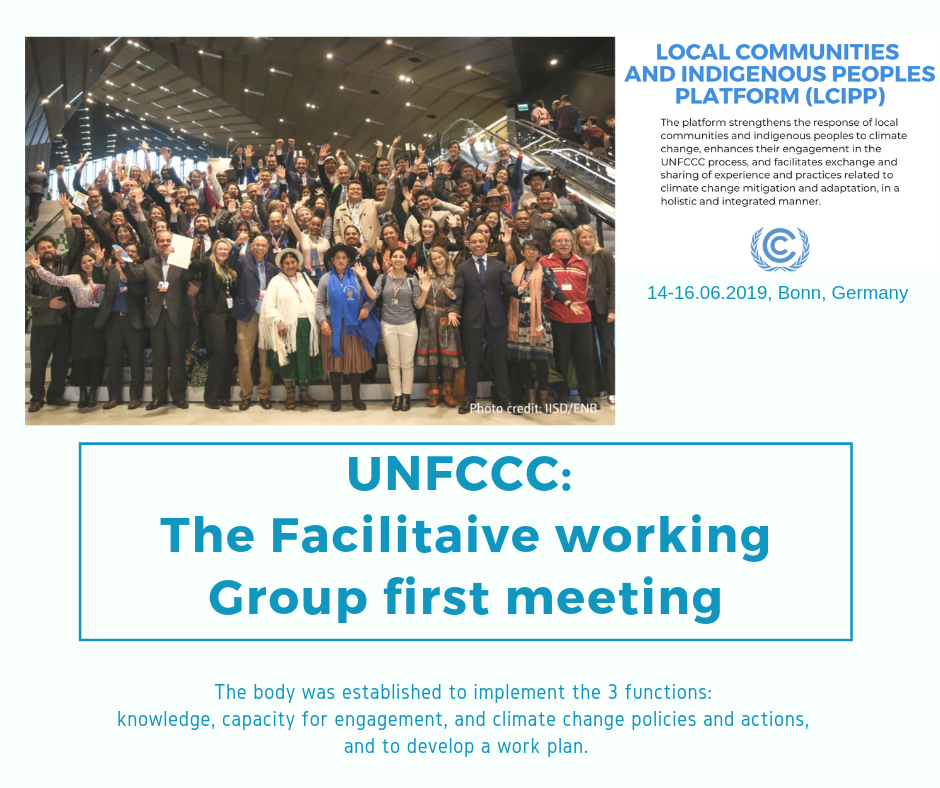
First Meeting of the FWG of the LCIPP in Bonn, Germany, 14-16 June 2019

This weekend is the First meeting of the Facilitative Working group of the Local Communities and Indigenous Peoples´ Platform (LCIPP) under the UNFCCC. The Platform was created to operationalize and facilitate the implementation of the Platforms 3 functions related to knowledge, capacity for engagement, and climate change policies and actions.

Courtesy of The Saami Council

Courtesy of The Saami Council

Indigenous Peoples, Climate Change, Traditional Knowledge and the new UN BBNJ Treaty

The high seas hold some of the greatest reservoirs of biodiversity, covering two-thirds of the world’s oceans

Only 1% is protected.

Indigenous Peoples and our Traditional Knowledge can be instrumental in addressing climate change, and protecting biodiversity in the high seas for generations to come. That's why our voices are essential in the new United Nations BBNJ Treaty 🌏

👉🏽 Join our Talanoa this Monday and find out how.

Speakers include; Salaseini Tagicakibau; Roberto Mukaro Borrero; Tina Ngata The Non-Plastic Māori; Ghazali Ohorella; and Clement Yow Mulalap. Participants are encouraged to also share their thoughts and ideas in the talanoa.

SIDE EVENT DETAILS:

"Indigenous Peoples, Climate Change, Traditional Knowledge and the new UN BBNJ Treaty".

Monday 22nd April, 14:00 - 15:30
Amartya Sen Room
Level 10, UNDP FF building
304 East 45th Street,
New York

Talanoa April 2019 .png

UN SG Summit: Invitation to Civil Society to collaborate on Nature-Based Solutions

Dear colleagues and friends,

The UN Climate Action Summit, being convened by UN Secretary-General on 23 September 2019 provides an opportunity for redefining people’s relationship with nature. ‘Nature-Based Solutions’ can offer a crucial response to climate change and sustainable development at the scale and pace that is needed: to make this transformation possible, the necessary actions must be clearly identified, along with robust implementation systems and finance on an unprecedented scale. The Summit provides an opportunity is for all of us from government, finance, business, civil society and international organizations to contribute to collective efforts that will tip the balance – reversing climate change, delivering multiple social, economic and environmental outcomes and benefiting lives and livelihoods everywhere. 

The role of civil society will be absolutely essential to build upon existing projects and experience from the field.

 The United Nations Secretary-General has established nine coalitions comprised of national governments who are joined by other stakeholders.  Their remit is to undertake preparatory work for the Summit and to ensure ‘transformative outcomes, of which Nature Based Solutions (NBS) is one. The coalitions are each preparing propositions that will be offered to world leaders at the Summit: once endorsed they will be followed up through the climate COPs and other intergovernmental processes.  It is anticipated that propositions, when implemented, will be transformative, have significant impact while reflecting public interest, contribute to equitable development, and take into account social and political considerations.  

 The co-leads of the NBS coalition are China and New Zealand. They envisage that contributions to the NBS theme could include (but not be limited to) scaling up the preservation and restoration of forests, land and marine ecosystems; conservation and restoration of wetlands; comprehensive treatment of soil erosion; prevention of desertification, climate resilient infrastructure and connectivity; eco-corridors and protection of biodiversity; climate compatible agriculture and food systems; regenerating ecosystems of the ocean and natural reserve systems with national parks as the mainstay.  

 The NBS co-leads and facilitation team would like to invite you to collaborate on nature-based solutions by sharing proposals which could be endorsed at the Summit and implemented in the lead up to the UNFCCC and CBD COPs. 

 You will find in the document attached here some guidance which will help you for writing the proposal and some explanation about the submission process.

This first round of consultation will be open until the 24th of April 2019.

 We very much look forward to receiving your contributions. 

 Please feel free to share widely across your networks of partners interested in nature-based solutions and climate action.  We would like to encourage a wide and inclusive engagement in the development of the proposition incorporating NBS in climate action.  This engagement should draw upon the wide range and innovative brilliance of the work underway on Nature-Bases Solutions.  

 Thank you.

 Best regards,

The Nature-Based Solutions Facilitation Team

NBSteam2019@gmail.com

LCIPP: Update on FWG1 and thematic workshop in June

Dear Friends of the LCIPP

 We are pleased to confirm that the first meeting of the Facilitative Working Group (FWG) will take place on 14-16 June, and it will be held at a venue in Bonn. More information about the venue/registration will be made available on the webpage as it becomes available. The meeting will be open to observers. A separate registration (from the SB registration) will be undertaken for the FWG meeting.

 In addition, the mandated LCIPP in-session thematic workshop is planned for for 19 June (the date will be confirmed soon when the SBSTA overview schedule is published), more information, including about which room it will be held in, will be made available on the website soon. Further LCIPP activities are also being organized, we will continue to keep you informed.

 Nominations to the FWG: nominations are still pending for 3 Party representatives (from Eastern Europe, WEOG and the LDCs). Nominations for 5 alternates are also pending (from Eastern Europe, WEOG, LDCs, SIDS and Asia Pacific). Here is the list of membership.

 Wishing you all a good day,

 Kind regards,

Tiffany

 Tiffany Hodgson
Programme Officer
Science and Review Sub-Programme,

Adaptation Programme

THodgson@unfccc.int

Participation in the Strategy Meeting for IP Engagement to the UN Climate Summit, 23 Sep, NY

TO: IP delegations coming to the PF session in NY 
ATT: Participation in the Strategy Meeting for IP Engagement to the UN Climate Summit, 23 Sep, NY

DATE: 25 Apr, NY

TIME: 3 p.m. - 5 p.m.

VENUE: TBC

Background:

The UN General Assembly  will hold a one-day Climate Summit in September 23, 2019, NY. The expected outcomes will be partnership and agreed actions' promotion through 9  different tracks/coalitions, each of them co-led by minimum 2 countries in a partnership with the UN. The mandate of the coalition is to build public and private partnerships and come with concrete proposals. This will be 2-3 initiatives per coalition.

There will not be a political declaration and nothing to negotiate. It is only listing of proposals that will be announced. The Summit is taking place at a moment of urgent action and response.

9 Tracks/Coalitions 

Nature based solutions: China@New Zealand supported by UNEP

Resilience and adaptation:  UK@Egypt supported by UNDP

Energy: Denmark@Ethiopia

Social and political drivers: Peru@ Spain supported by ILO, DESA, WHO, Global Compact

Mitigation: Chile@Japan

Youth and mobilization: Ireland @ Marshall Islands

Climate Finance: Jamaica@France@Qatar supported by the WB

Infrustructure cities and local action: Kenya@Turkey

Industry transition: India @ Sweden

CS Modality:  Sep 23rd - only plenary of the General Assembly. 

There might be roundtables on the weekend before the Summit.


Objectives of IP strategic meeting

1.      to develop one common position and strategy re the CS between all 7 regions

2.       to coordinate and develop a road map on the way to CS, NY (PF - Bonn - Abu-Dhabi - NY)

3.       to collaborate closely with Ambassador de Alba as a Special Envoy of the Climate Summit

4.       to create alliance with coalitions leads and lobby IP solutions

Rodion Sulyandziga, 
On behalf of IP delegation having a meeting with Dr.Alba within the Copenhagen Conference on SDG and Climate Change, 1-3 Apr           

================ 
Rodion Sulyandziga
Director, Ph.D
Center for support of indigenous peoples of the North (CSIPN)
NGO in Special Consultative Status with the Economic and Social Council of the United Nations
rodion@csipn.ru
skype: rodion_ritc
http://www.csipn.ru

An open web-based dialogue, 2 April, on the development of a dedicated LCIPP web portal

Dear friends of the LCIPP,

Please join us for an open web-based dialogue on the development of a Dedicated Web Portal for the Local Communities and Indigenous Peoples Platform (LCIPP) on next Tuesday, 02 April, 2019.

BACKGROUND:

The Conference of Parties, at its twenty-fourth session, requested that “the secretariat, with the support of the Facilitative Working Group, to make the work of the Local Communities and Indigenous Peoples Platform widely accessible, including through the development of a dedicated web portal on the Local Communities and Indigenous Peoples Platform on the UNFCCC website” (decision 2/CP.24, para 21).

OBJECTIVE:

The online dialogue aims to provide a space for all stakeholders of the LCIPP to provide their views as well as best practices and lessons learned to enable the web portal to effectively and efficiently support the implementation of the LCIPP’s functions. The dialogue will serve as a basis for the concept phase, some guiding questions are attached. Further discussions will take place on the sidelines of the upcoming SB session in Bonn, Germany, and at the first FWG meeting.

HOW TO PARTICIPATE: 
You can register for the respective sessions via the links below:

09:00-10:30 CET (English)11:00-12:30 CET (French)13:00-14:30 CET (Spanish)16:00-17:30 CET (English)Please don’t hesitate to forward this on to other interested stakeholders.

For further information, please the webpage (here >>>). If you are unable to join a dialogue, please feel free to email your ideas/suggestions to me, Tiffany Hodgson (thodgson@unfccc.int).

For technical questions related to the WebEx Dialogue, please contact Chad Tudenggongbu (ctudenggongbu@unfccc.int) and David Oehmen (DOehmen@unfccc.int).

Thank you, and we look forward to hearing from you.

Chad – on behalf of the LCIPP team.


 - How-to-guide for using WebEx 

-
Guiding questions for Web based dialogue

COP 24 IN KATOWICE CONCLUDES WITH HISTORIC VICTORY AND SOME DISAPPOINTMENTS FOR INDIGENOUS PEOPLES IN THE INTERNATIONAL FIGHT TO HALT CLIMATE CHANGE

"Despite this power imbalance within the UNFCCC (and, by and large, the entire UN system), the over 100 Indigenous delegates representing all regions of the world stood united to insist on formal participation in this process that impacts us so directly and to ensure that our rights and traditional knowledge are respected in national and global efforts to combat climate change."


Source: Cultural Survival
Read full article: Click here

Screen Shot 2018-12-31 at 8.00.57 AM.png